About the Program
Learn about aesthetics, social cooperation, political philosophy, and environmental economics; discover the role of beauty in fostering attention, care, and social connection; explore Italian culture and art.
Program Structure
The program includes daily course lectures, smaller discussion sections, and guest lectures during the week, as well as numerous field trips, excursions, and activities that allow you to delve into Italy’s artistic heritage and contemporary society. No knowledge of Italian or prior coursework in the humanities is required to apply to this program.
Note: Non-credit Italian language instruction is offered to all interested students at the beginner, intermediate, and advanced levels.
Approximately thirty students will attend the program. Students enrolled at any accredited college and university are welcome to apply. In recent years, students from Brown, Emerson, Middlebury, Penn, Princeton, USC, Vassar, and Yale participated in the program.
To learn more, visit the program website. If you are interested in speaking with a student who has participated in the program in recent years, please contact the Program Director (Erspamer@FAS.Harvard.edu).
ITAL S-190 counts as one full-year course (8 credits) of degree credit.
ITAL S-190 Study Abroad in Italy: Beauty and Community
Francesco Erspamer, Robert S. and Ilse Friend Professor of Romance Languages and Literatures, Harvard University
8 credits
UN, GR Limited enrollment.
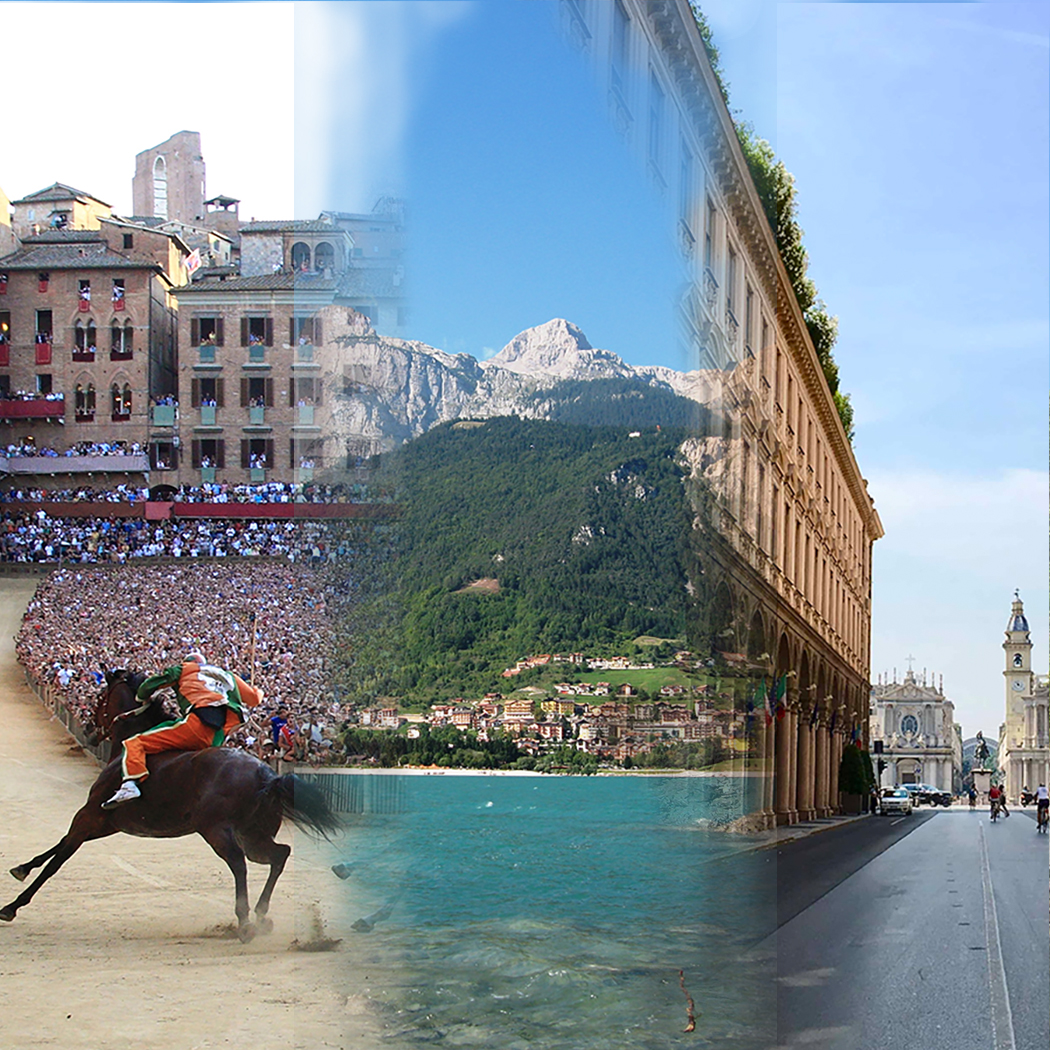
The purpose of this course is to show that aesthetics and culture are essential for community-building, critical thinking, sustainable development, and political agency. Students read and discuss the main philosophers and writers that have defined the concept of beauty, from Plato to Immanuel Kant, and from Martin Heidegger to Martha Nussbaum, Elaine Scarry, and Byung-Chul Han—and reflect upon the connections between beauty and the other two main values in the philosophical tradition, truth and goodness. Other topics that we address include cooperation, authenticity and imagination, degrowth and environmental economics, and Italian culture and society. Outside the classroom, numerous activities and trips constitute an integral part of the course. We visit museums, castles and cathedrals, natural parks, and contemporary cultural spaces. We watch and discuss eight masterpieces of Italian cinema, taste wines, learn the techniques for making espresso, spend a weekend on a lake in the Alps, and visit a nearby sustainable farm. In Siena, students are deeply involved in the local community; each of them is invited to join one of the city’s contrade (wards) and participate in the preparation for the Palio, the horse race which has been the city’s most important event for centuries. A detailed syllabus can be found here.
Prerequisite: None
Where You'll Live and Study
You will spend two weeks in Torino, known for its baroque architecture, art-nouveau cafes, and quality food and wine; three weeks in Trentino, a region famous for the Dolomite mountains and for its cooperative economy; and almost four weeks in Siena, a perfectly preserved medieval city that, over the course of hundreds of years, has developed an extraordinary system of social cohesion, solidarity, and social pride through its vibrant contrade. These contrasting Italian cities are the ideal context for experiencing beauty and community. While the program is in session, personal travel outside of Italy is not allowed.
Accommodations
In Torino, you will stay in studio apartments at the Santa Giulia Hotel and Residence, a recently renovated 19th-century building located in the lively Vanchiglia district, a fifteen-minute walk to the city center. Each apartment accommodates two students and has a private bathroom, free wi-fi, TV, air conditioning and a fully equipped kitchenette. Classes will be held at the Scienza Nuova Research Institute, which can be reached by a twenty-minute bus ride.
In Trento, you will stay at the elegant Grand Hotel Trento, in the old town center. All double rooms have a private bathroom, air conditioning, and free wi-fi. A complimentary full breakfast is offered. Classes will be held in a nearby building of the Università di Trento.
In Siena, you will stay at the Refugio, a 16th-century former convent located in the historic center — a five-minute walk from Piazza del Campo. All double rooms have private bathrooms and free wi-fi; they do not have air conditioning but do have fans. Students have access to the common areas of the Refugio and to the gardens. Classes will be held in a nearby building of the Università di Siena.
This program gives you access to unique experiences to which you wouldn’t otherwise have access on your own — many of the places had few tourists or simply were not open to the public.
Application
To apply, you must:
- Be at least 18 years old
- Have completed at least one year of college or be a first-year student
- Be in good academic standing
Students enrolled at any accredited university are welcome to apply. See the How to Apply page for more information.
The Summer 2027 application will be available on December 1 via link at the top of this page. Each program has unique requirements included in the online application. Beginning your application early is the best way to ensure that you have sufficient time to review and complete the application requirements by the deadline.
You may apply to no more than one program.
A complete online application includes:
- Basic personal information
- A statement of interest
- Your most recent transcript
Interviews may be requested at the discretion of the program
Be sure to read about the funding options available for Harvard Summer School Study Abroad programs.
If you have questions about the application, please contact the Harvard Summer School Study Abroad Office by email at SummerAbroad@Summer.Harvard.edu.
Cost & Expenses
The program fee includes:
- Tuition
- Accommodations
- Scheduled program activities
- Some meals (the program will provide further details)
You will also need to budget for a number of expenses not covered by the program fee. The amounts listed below for these out-of-pocket expenses are approximate, and you may incur additional expenses not noted here. Your actual expenses will depend on a number of factors, including personal spending habits and currency exchange rates. Note that expense categories — especially airfare — may be subject to significant fluctuations.
- International airfare ($1,600–$2,000)
- Ground transportation ($250)
- Meals ($1,500)
- Personal expenditures, communications, course materials, and miscellaneous ($350)
If you have specific questions about personal budgeting, please contact the program directly.
See Funding and Payment for information on how to submit payments and funding options.
Additional Information
- Questions? Contact Francesco Erspamer at Erspamer@FAS.Harvard.edu.
- Need an accommodation? See Students in Need of Accommodations to request one through the Accessibility Services Office.
- Accepted to the program? See Admitted Students for information about predeparture requirements.